By Felice Kinnear


How technology ballooned the sails of an Oscar winning performance carving a place in history.
By Felice Kinnear
‘The Whale,’ a ground breaking, nuanced drama adapted by director Darren Aronofsky (Black Swan), set a remarkable new bar for technology in cinema. The movie candidly explored how a ruptured mental state sparked by trauma can lead to morbid obesity. The plot line hinged on the realistic qualities of a 300 pound prosthetic body suit, never seen before in cinema.
Because of the immense weight of the latex, the suit needed a cooling system installed to keep Fraser from overheating plus a detachable arm to make bathroom breaks easier. For the makeup wizard behind the scenes, Adrien Morot, this meant handling the visuals with delicate care and was a huge part of his decision to bypass using a clay mould. He wanted to find the most authentic look to seamlessly transform Fraser into character.
Darren Aronofsky took five years to find the right actor physically strong enough to handle the weight of the prosthetics while maintaining Charlie’s raw vulnerability. He wanted to cast someone who people thought they already knew and whose depth had not yet been discovered. When Aronofsky met Brendon Fraser for the first time he was struck by his genuine kindness and instinctively felt he would tell Charlie’s story well.
The Whale was set to film during lockdown which produced several roadblocks for the makeup team. Morot couldn’t make a mould of Fraser in person so he figured out how to use measurements with an iPad and create a completely knew way of making a full latex body suit. According to the L.A. Times, Morot sculpted the body suit on a computer from a previous scan of Fraser. Positives of the digital body were 3-D printed in resin then cured layer by layer with ultraviolet light. Silicone was injected between negative casts of the sculptures and the positives to create realistic looking layers of dimpled skin.

drien Morot could not physically measure Brendon Fraser during pre production which led him to creating a new way of making prosthetics.
“It took a pit crew to make this character,” Fraser said at the panel discussion the day before The Oscars at the Academy Museum. “Charlie’s body had to obey the laws of physics and gravity in a way that we haven’t seen on big screens as yet until now. It’s an effort for Charlie to move.”
“The makeup and costume was cumbersome and appropriately so. It gave me a strong sense of ownership in being able to speak the voice of those who don’t otherwise have a voice when that character is portrayed.”
“The makeup itself, they had to adjust continuously. Charlie has a heart and chest condition so when he gets worked up, enraged or sad, his skin turns red, crimson or ruby red.
The makeup team would have to jump in to match my skin tone, as I’m told, help me here, to the actual prosthetics themselves. And of course, taking into consideration that Charlie’s health is declining over the five days. So matching that physically was fairly challenging. I was in several layers.”
“One of those layers was a cooling suit,” Fraser explained. “It was very helpful, like a race car driver. The couch was tricked out with a trap door so that the pipes could go up my back, keeping me cool when I heated up. I had my own cooling tent for what I needed to do which was stay clearly focused and pay attention.”
“The work in the scene was left to the grown ups to take care of making Charlie look right,” he said playfully. “When I was in a scene with Hong Chow, who’s incredible, and Sadie Singh, Darren liked to shoot long takes, and many of them. The challenge for me was to stay focused with the actors that I was working with and then allow for them to jump in to make all the necessary micro changes that go into keeping Charlie real.”
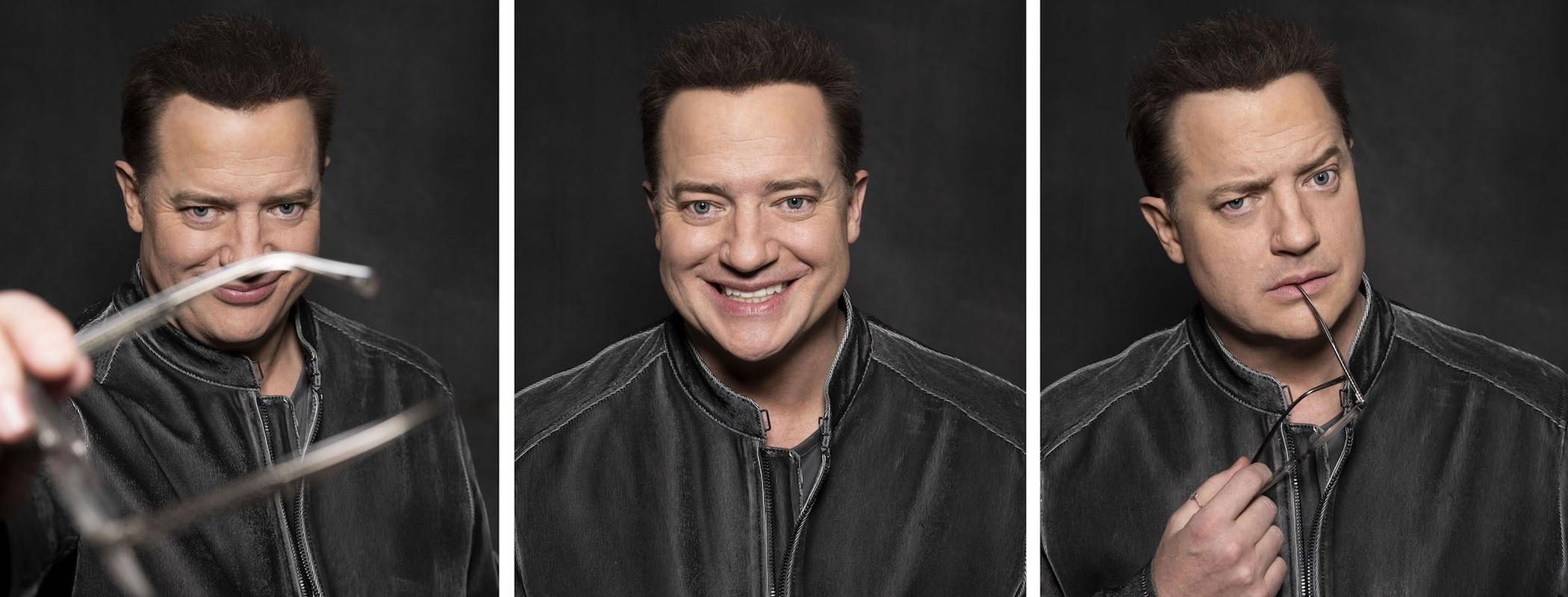
Fraser, Aronosky and Morot’s meticulous attention to detail and dedication to authenticity is paying off. Fraser became the king of standing ovations and won his first Oscar on March 12th alongside Morot, who won Best Hair & Makeup. These epic moments and marks in history speak to Aronosky’s acute instincts and unflinching approach to challenging his audience. The Whale relaunched Fraser’s career into another sphere and set the bar higher for the rest of the film industry. For full interview check out:
 creativeinspomagazine.com
Leave a comment