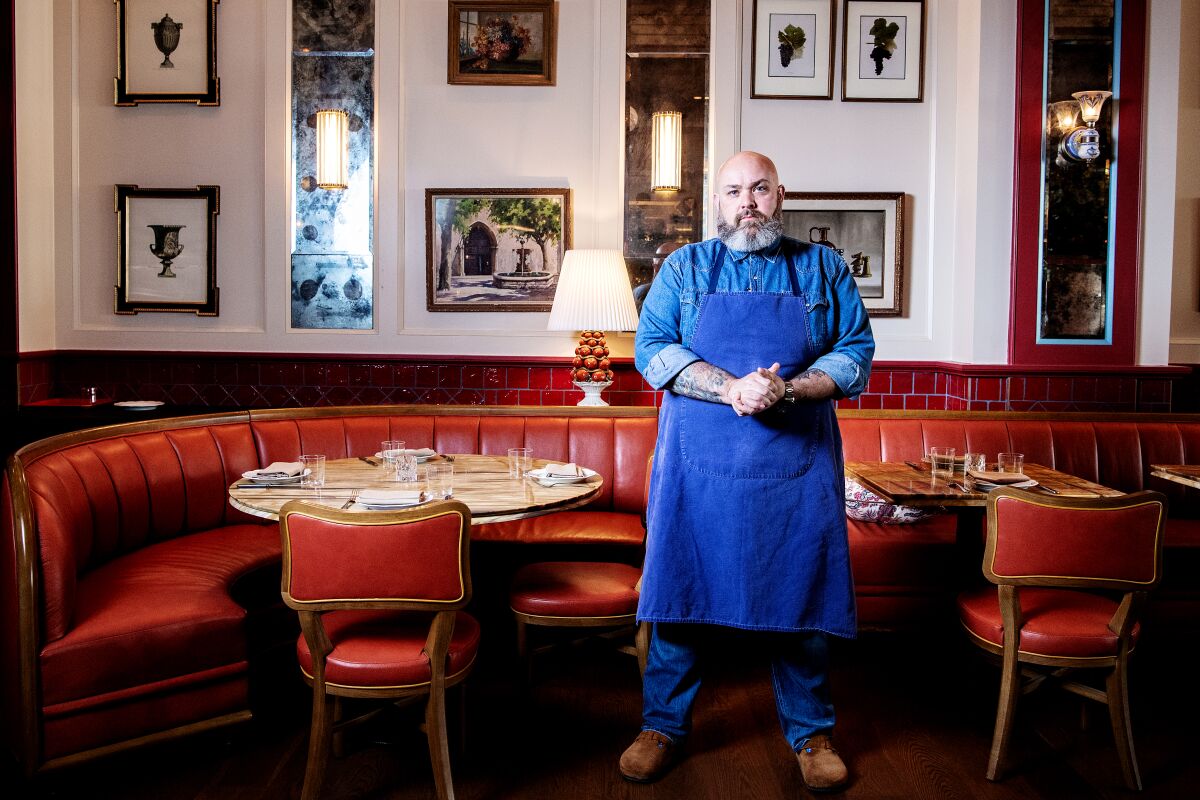
Evan Funke has become famous for doing something shocking and Hollywood is noticing. Kim Kardashian marked her 43rd trip around the sun with a visit to Beverly Hills’ latest dining destination. The opening of his latest artisan masterpiece has sirened mega watt a-listers like Beyonce & Michelle Obama & now the Kardashians are savvy to Funke’s irresistible Roman cuisine.
Draped in splendor, The opening of Evan Funke’s latest artisan masterpiece has found new gravity The reality sensation walked in a Balenciaga dress as patrons froze mid bite. As food dropped off forks, Kim The opening of Evan Funke’s latest artisan masterpiece.
This avant-garde masterpiece, constructed from a stretchy swimwear material, married the allure of layered bikini tops with seductive side cutouts, creating a symphony of fashion-forward audacity. What warrented such an entrance?
Last year, Funke launched Mother Wolf, a restaurant mirroring the similarities between Rome and L.A., sirening to America’s most discerning palettes. Vanity Fair caught wind of Michelle Obama dining with Beyoncé there and offered Chef Funke the gig of a lifetime. After cooking for
Hollywood’s most exclusive after party after the Oscars, Funke teamed up with real estate expert Kurt Rappaport to plan the launch of the largest restaurant Beverly Hills has ever seen.’Funke’ will be a restaurant 180-seat deep spanning over three-levels located at 9388 Santa Monica Boulevard.
Given that Funke is attaching his last name to his new endeavor, the sentimental omage to his all time favorites is set to galvanize a special place in Beverly Hills culinary scene. For Funke’s fascinating back story about his epic fall to rise from the ashes, check out Maser Chef Creates Dining Destinations.
According to National Geographic, pasta originated in China about 7,000 years ago. Archaeologists believe that central Asia is most likely the first area to have produced noodles given the evidence of digs in the area. From Asia, it traveled westward. The way it reached Europe is unclear, though there are many theories. Some believe that nomadic Arabs are responsible for bringing early forms of pasta to European soil.
However it got there, once it reached the Mediterranean the process was refined, and durum wheat became the ingredient of choice for pasta flour because of its high gluten content and long shelf life. Pasta soon became a star in most households due to its longevity. After all, this was a time when the storage of food was so imperative to survival.
Over time, because of pasta’s sustainability and versatility, it became firmly rooted in Italian culture. The mild Mediterranean climate of Italy is suited to growing fresh produce and herbs, which inspired creativity with a variety of sauces. Tomato-based sauces emerged as a complement to pasta, and remain a star ingredient to many classic dishes.
The inspiration for Funke came from pasta’s surprising story. In 2020, we are most familiar with dried pasta imported from Italy to American soil. To survive the trip, dried pasta is usually made from semolina or purified durum wheat. Semolina isn’t totally absorbent, which makes for a perfect al dente style. It also has a long shelf life, unlike fresh pasta.
Perhaps the most surprising thing to learn about pasta is over this immense stretch of time, very little has changed in the ingredients. The dough is still made with flour and eggs in lengthy preparation to build life (or gluten structure) into the pasta.
This takes a combination of stages for it to form including four hours rest to allow for calmer elasticity. If it is rolled through a machine after all this beautiful texture is built, the flavor becomes completely different and vastly flatter in comparison (www.pbs.org/food/the-history-kitchen/uncover-the-history-of-pasta/).
It is the Italian flavor profile and process which lit Evan Funke’s passion on fire. His initial fascination with cooking began with his Mom’s cookbook. Funke talks about it as a beacon of inspiration connecting him to a flood of warm childhood memories.
“Growing up I knew my Mom’s cookbook held the gold,” Funke expressed passionately. “I knew there was love in that book. It’s a time capsule from where I first started to develop a personality and an open-mindedness of food. To this day, it still holds the same gravity for me.”
Evan grew up in Southern California and after high school set out to attend the naval academy. Two weeks before he was due to leave, his girlfriend at the time convinced him to study his love of food instead. Funke recognized the importance of rebuilding his path to his passion and moved to Bologna. It was his first time traveling away from home.
He fell in love with the freedom and anonymity of living in another country away from home-grown expectations. He was now on a path to becoming the person and chef he truly wanted to be. “It was a very liberating experience to be on my own not to speak the language whatsoever. Yet somehow, someway, I connected to communicating the emotion behind pasta.”
This connection to Italian cooking and culture eventually led him to study under one of the Pasta “Maestras” in Bologna, (a female professor/teacher of Italy); Alessandra Spisni. Funke describes her as ‘the Mike Tyson of Pasta’, and he paid close attention to her technique while in her class. Spisni taught him how to harness the soul of the ancient art that gave him pure passion. He then dedicated his life’s work to bring the most ‘comprehensive pasta programme’ to America.
Evan’s dream of owning his own restaurant and pasta lab came to life when a serendipitous meeting aligned him with restaurateur, Janet Zuccarini. She instantly recognized his cooking style as Casalinga (housewife style). and offered to fund a restaurant with Funke on Abbot Kinney Blvd in Venice Beach. Funke was impressed by the accuracy in her description which solidified their connection and eventually moved them into building something truly extraordinary. Felix Trattoria is a restaurant with an original feature.
The establishment is centered around a pasta lab where customers can see their meals built piece by piece before their eyes, connecting the art
to the flavor. Funke and Zuccarini’s efforts were not lost on Southern California and Felix was given ‘the Best Restaurant in America’ title from Esquire magazine after its opening in 2017.
“Some of the most difficult recipes have very few ingredients; that’s why they are hard to make,” Janet explains. She had paid close attention to her surroundings while completing her MBA at Boston University in Rome and was intrigued by the farm-to-table concept far before it was in style.
Janet saw the power in minimal quality ingredients mixed with artful preparation. She also noticed how Italian cooking and culture brought families together. Janet noticed the kitchen was the nucleus of the household and most social interaction was centered around it.
“Italian lifestyle and flavors are reminiscent of my family, we were always gathering to eat together,”she said. “When I was in Italy, they would always welcome you off the streets…they love to eat together. I studied business so it was a natural merging of interest. I’m a business person, but also a passionate person.”
This was an enormous win for Funke. In 2015 his first attempt at partnering with a restaurateur had landed him in a multi million dollar lawsuit. After the heartbreak of closing Bucato, a popular pasta restaurant in Culver City, Funke immersed himself in sifting through rubble to find the hard lessons.
“Failure became my sharpest weapon.” he told Variety Magazine. He began to build a remarkable comeback while maintaining Felix through the pandemic. Funke took 2020 and 2021 to conduct deep, introspective work and intensive study. This led to opening a dining destination in an extraordinary building in the heart of Hollywood.
Part of Mother Wolf is about understanding that the ethos of Italian cooking revolves around showcasing local ingredients,” he told Andy Wang. “I’ve always had the approach of treating California as if it’s its own region in Italy and I’m cooking as Italians cook; with what is directly available within arm’s distance, what is hyper-seasonal.”
Funke became fixated on the parallels he saw between Rome and Los Angeles, centering Mother Wolf’s blueprint in both cities’ analogies. “Roman food is a melting pot of a lot of different things, as is Los Angeles,” he told Surface magazine. “It’s ancient and modern, pastoral and urban. The juxtaposition of having Biggie Smalls play at Mother Wolf while eating very rustic food works very well for Los Angeles.”
On top of that, so much of Italian food is environmentally driven. Like Rome, L.A. is home to some of the best farmers markets in the country. Santa Monica is America’s premier farmers market,” he told But First We Feast. “It crushes the NYC Green Market because of the sheer bounty and diversity available. It’s a chef’s wet dream.”
Meticulous sourcing and technique are compelling Hollywood to frequent Mother Wolf. If it is not stamped with DOP or handpicked from Santa Monica’s farmers market, it likely won’t be on the menu.
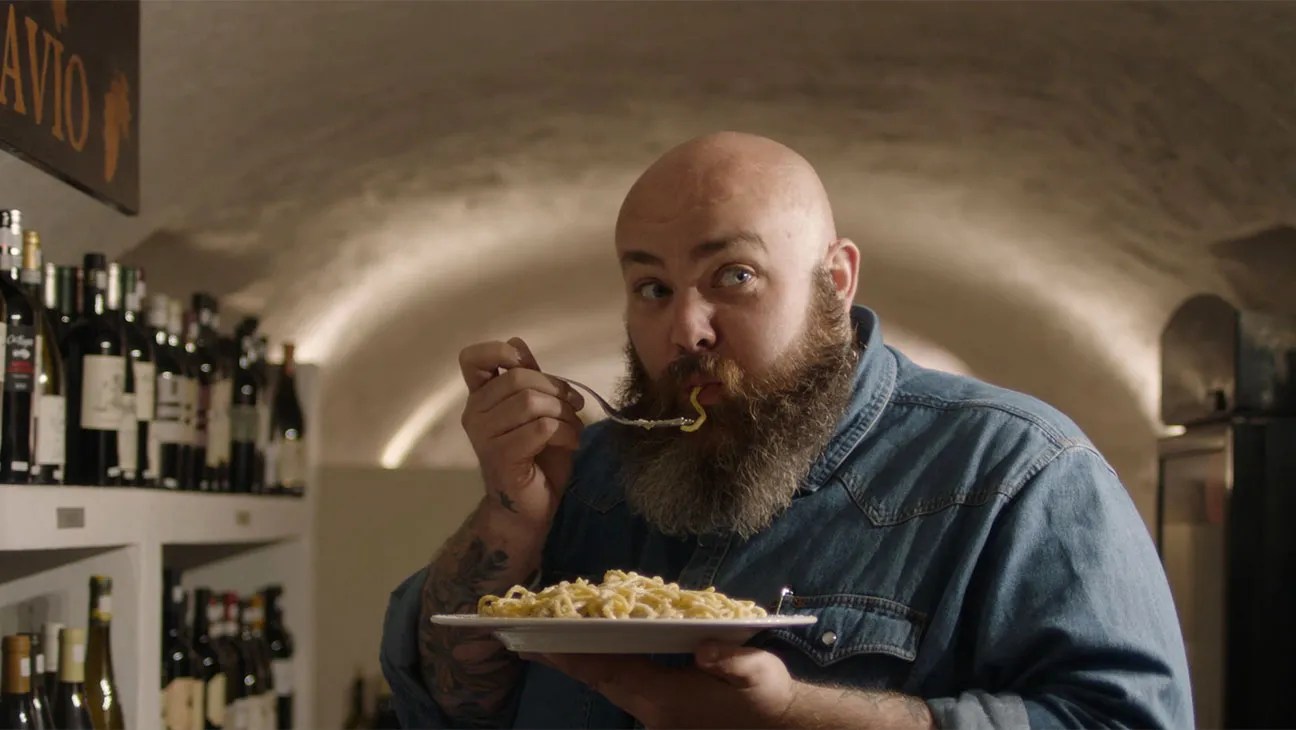
Paired with the best produce in America and imported ingredients from Italy, this is how Funke creates the dish he is perpetually passionate about: “Tonnarelli Cacio e Pepe is a dish that needs only a few instruments to make tremendous music,” Funke explained on the Today show recently.
“The first secret is to always salt the pasta water like a soup, never like an ocean. Mix coarse and fine pepper together. The course is for aromatic purposes fine is for heat. Use a tablespoon of the mixture to a pan on medium heat. Toast the pepper with the pan to bring the natural oils of the pepper out and into the pan.”
“Then add olive oil. This is very important to do after the pepper has been toasted so that the pepper has been toasted so that the surface oils of the pepper will infuse with the oil. Add 22 grams of butter. Make sure it doesn’t brown or it will start to taste too nutty.”
Add four ounces of pasta water to the pan. This is why it is important not to salt the pasta water like the ocean. It needs to be the right flavor to compliment the pepper at this stage. Once pasta water is added, bring to the boil. Cook the fresh tonnarelli for three minutes.
Add to the saucepan and create centrifugal force with quick rotations, turning the pasta into the sauce rapidly. Use a fork to spin it together and mix intensely in the center. Finish it with cheese. Just a few pinches and stir. Swirl around large tongs and serve.”




 creativeinspomagazine.com
Leave a comment